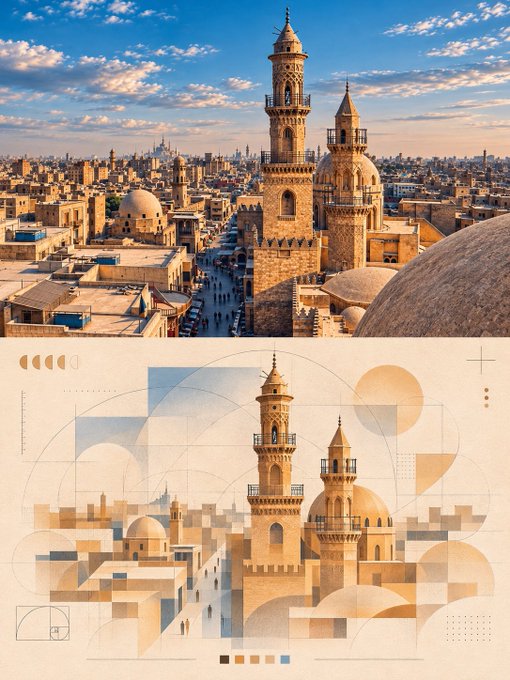
几何解构风的日常事物概念海报系列
Sharon Riley @Just_sharon7 · 2026-11-22 · 3.1万 浏览 · ♥ 575
基于上传照片创作的概念艺术海报,结合抽象几何结构、局部照片镂空与排版文字展现主体的象征构成,使用 TapNow 上的 GPT Image 2.6 生成。
完整提示词
Transform the uploaded photograph into a premium-quality, museum-grade conceptual art poster that investigates what the photographed subject is symbolically made of, rather than what it is physically made of.
CENTRAL PHILOSOPHY: "Everything we see is made of things we cannot see."
The artwork must reveal the invisible emotional, philosophical, cultural, historical, or existential ingredients that give the photographed subject its meaning.
The final composition must feel like a visual dissection of the subject's hidden identity.
FORMAT: Vertical 50 × 70 cm, exact 5:7 aspect ratio, 300 DPI, target resolution 5906 × 8268 pixels.
1. SUBJECT ANALYSIS — DISCOVER ITS SYMBOLIC INGREDIENTS
First, carefully analyze the uploaded photograph.
Identify the main subject, its defining characteristics, visual relationships, environment, posture, condition, and emotional atmosphere.
Then ask:
"If this subject were not made of physical matter, what invisible things would it be made of?"
Discover three to five meaningful symbolic ingredients that are specifically connected to the photographed subject.
These ingredients may relate to memory, resilience, longing, belonging, contradiction, transformation, time, hope, vulnerability, connection, or other concepts genuinely suggested by the image.
Do not automatically use these example concepts.
Derive the symbolic ingredients independently from the actual photograph.
Avoid obvious, superficial, generic, or interchangeable interpretations.
The chosen symbolic ingredients must reveal something thought-provoking about this particular subject.
2. MAIN COMPOSITION — THE SYMBOLIC ANATOMY
Create a sophisticated abstract composition in which the original photographed subject appears to be constructed from its invisible symbolic ingredients.
Translate each selected ingredient into a distinctive visual form.
For example:
A feeling of resilience might become a geometric structure that remains connected despite visible fractures.
A sense of memory might become overlapping translucent forms that preserve traces of earlier shapes.
A sense of freedom might become an open curve extending beyond an otherwise rigid geometric boundary.
These are conceptual examples, not mandatory visual elements.
Create original geometric interpretations based on the actual photograph and its selected symbolic ingredients.
The final abstract artwork should feel like the subject has been deconstructed into its invisible components and carefully reassembled.
The resulting symbol must remain visually connected to the original subject's defining silhouette, structure, or visual character.
3. UPPER-RIGHT CUTOUT — VISIBLE REALITY
Introduce an elegant sculptural cutout entering diagonally from the upper-right edge.
Through this opening, reveal an authentic, recognizable fragment of the original uploaded photograph.
This opening represents the subject's visible physical existence.
The photographic fragment should appear intact and realistic.
Its contours should subtly transition into the symbolic geometric composition toward the center.
4. LOWER-LEFT CUTOUT — THE HIDDEN COMPOSITION
Introduce a second sculptural cutout entering from the lower-left edge.
Reveal another meaningful portion of the same original photograph.
Allow the geometry surrounding this opening to connect visually with the abstract symbolic ingredients.
The two cutouts must be asymmetrical, sophisticated, and visually balanced.
They should never resemble ordinary photo frames or conventional horizontal panels.
Both openings must reveal different portions of the same underlying original photograph.
5. SYMBOLIC CONSTRUCTION — MADE OF INVISIBLE THINGS
This is the most important creative requirement.
The abstract artwork must communicate that the photographed subject is symbolically constructed from the three to five invisible ingredients identified during analysis.
Each ingredient should have a unique geometric expression.
Use visual relationships between these forms to show how the ingredients interact.
Some may overlap, suggesting interconnected experiences.
Some may oppose one another, representing internal contradictions.
Some may appear incomplete, representing absence or uncertainty.
Others may provide structural support, representing the invisible forces that hold the subject together.
Avoid creating separate decorative icons for each ingredient.
Instead, integrate all ingredients into one unified, recognizable abstract symbol.
The viewer should feel that the symbolic ingredients are the actual conceptual building blocks of the subject.
6. CONCEPTUAL TYPOGRAPHY — WHAT IS IT MADE OF?
Include a small, refined conceptual statement that is automatically adapted to the uploaded photograph.
Use this structure:
"[SUBJECT] IS MADE OF [SYMBOLIC INGREDIENT 1], [SYMBOLIC INGREDIENT 2], AND [SYMBOLIC INGREDIENT 3]."
Replace every placeholder with original, meaningful language derived from the photograph.
The statement must describe symbolic composition, never literal physical materials.
For example:
"A FLOWER IS MADE OF PATIENCE, FRAGILITY, AND THE COURAGE TO BEGIN AGAIN."
"A CITY IS MADE OF AMBITION, DISTANCE, AND A MILLION UNFINISHED STORIES."
"A TREE IS MADE OF TIME, SILENCE, AND THE ART OF HOLDING ON."
These are illustrative examples only.
Do not copy these statements unless they genuinely correspond to the uploaded photograph.
Generate a fresh, emotionally resonant, philosophically thoughtful statement specifically for the photographed subject.
Place this statement discreetly within the poster's negative space, using refined editorial typography.
The statement should be short enough to feel poetic, not explanatory.
7. LIGHT CONTEMPORARY COLOR SYSTEM
Extract the photograph's signature colors and reinterpret them into a restrained, slightly light pastel palette.
Use warm ivory, powder blue, muted sage, dusty blush, pale apricot, and soft neutral gray where appropriate.
Assign each symbolic ingredient a subtle visual identity through controlled color relationships, geometric characteristics, or material transparency.
Avoid excessive color coding or infographic-style labeling.
Maintain one harmonious visual composition.
8. MATERIALITY & PRINT CHARACTER
Create subtle layered-paper depth around the photographic cutouts.
Incorporate delicate risograph grain, archival paper texture, soft print imperfections, and extremely restrained analog registration effects.
Keep the original photographic fragments sharp, realistic, and recognizable.
Maintain clean geometric edges and professional fine-art printing quality.
9. FINAL ARTISTIC INTENTION
The poster must function as a conceptual portrait of the uploaded subject, whether the subject is a person, animal, object, building, landscape, or natural form.
The original photograph shows what the subject looks like.
The abstract composition reveals what the subject is symbolically made of.
The poetic statement expresses the deeper meaning of its existence.
All three elements must communicate one unified artistic idea.
The artwork should invite the viewer to reconsider an ordinary visible subject as a complex composition of invisible experiences, emotions, histories, and relationships.
Create a minimal, culturally evocative, intellectually engaging contemporary art poster with asymmetric photographic cutouts, symbolic geometric construction, soft pastel colors, and sophisticated editorial typography.
No literal material descriptions, no generic motivational quotes, no random geometric decoration, no conventional split-screen panels, no excessive text, no external frame, and no watermark.
出处:原帖正文,原文照录。
需自备参考图:作者还给了模型自己的图片TapNow
去 X 看原帖 ↗模型归属以作者自述为准。作品版权归原作者,要更正署名或下架请私信 @GoSailGlobal。