
Andrew Ng 2026 《AI Prompt Engineering》Module 2 Complete Notes: Turning AI into Your True Thinking Partner
Module 1 solves the "finding information" problem; Module 2 puts AI to real work—as a thinking partner, an editor, and a reviewer.
The single most mind-bending consensus across these 8 lessons: AI is, by default, a high-IQ new grad who's prone to flattery. Every layer of prompt engineering ultimately exists to bypass its "I want to please you" instinct and force it to give you something genuinely useful.
Organized in a three-part format: screenshot + one-line takeaway + one template.
Day 1 · Brainstorming: Push AI Out of Its "Obvious Answer" Comfort Zone
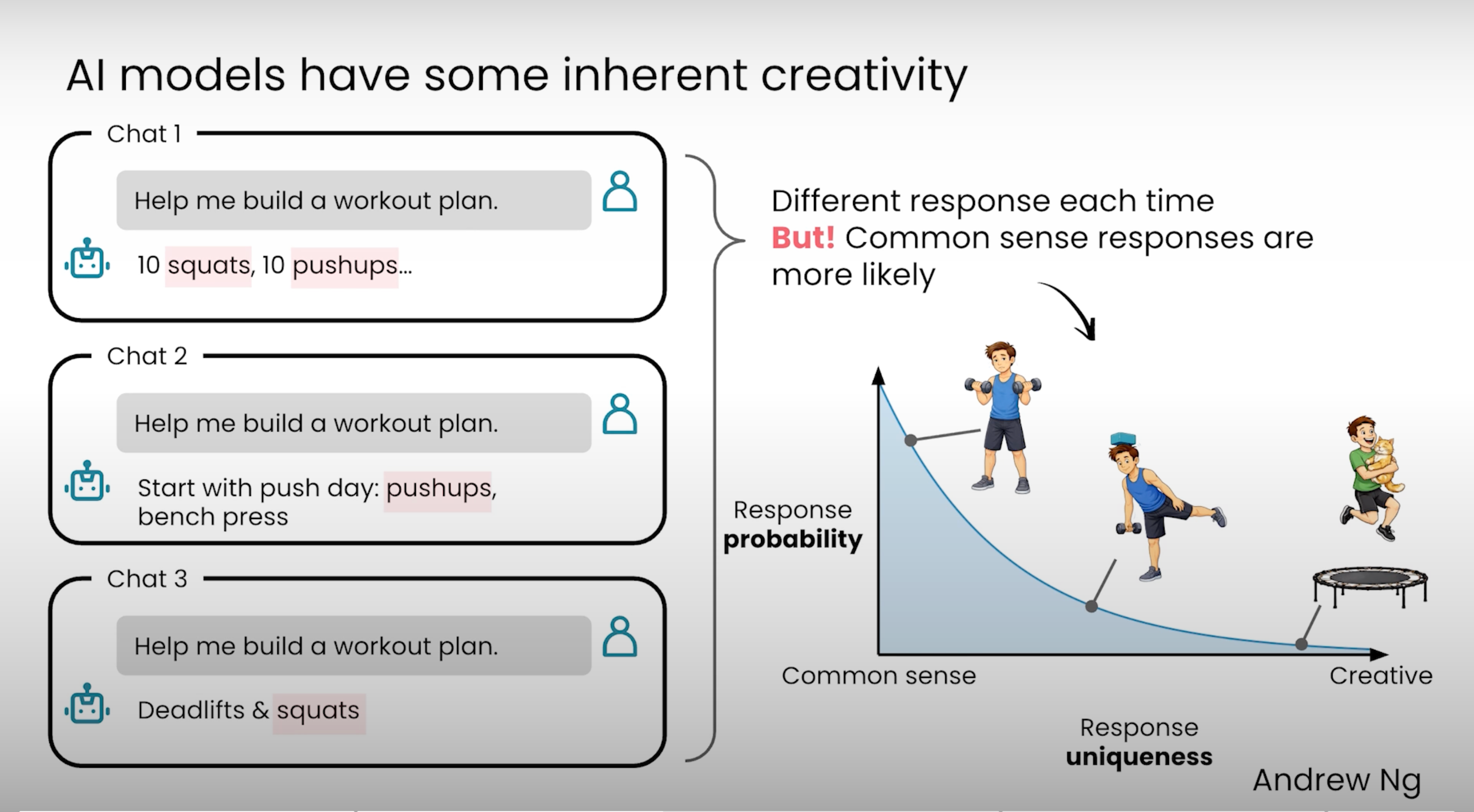
💡 One-line takeaway: AI defaults to "common answers" (squats, push-ups) because that's what most internet text looks like—if you want creative answers (trampoline breaks, cat-triggered micro-workouts), you need to provide rich context and iterate across multiple rounds of feedback.
📋 Template · Iterative Brainstorming
Help me brainstorm: [problem]

My background and context:
- Current situation: [key constraints]
- Resources: [what I have on hand]
- Things I've already tried: [list 2–3 directions you don't want to revisit]
- Desired angle: [creative / practical / unconventional / contrarian]

Give me 5 approaches from different angles. Keep each to 30 words or fewer.
List them first—hold the details until I give you feedback.

—— After I review, I'll tell you "what I like about option X, what I don't like about Y,"
and you'll generate 5 new options based on that feedback. Repeat for 3 rounds.
Day 2 · Context Management: You Have the Equivalent of 4–5 Harry Potter Books
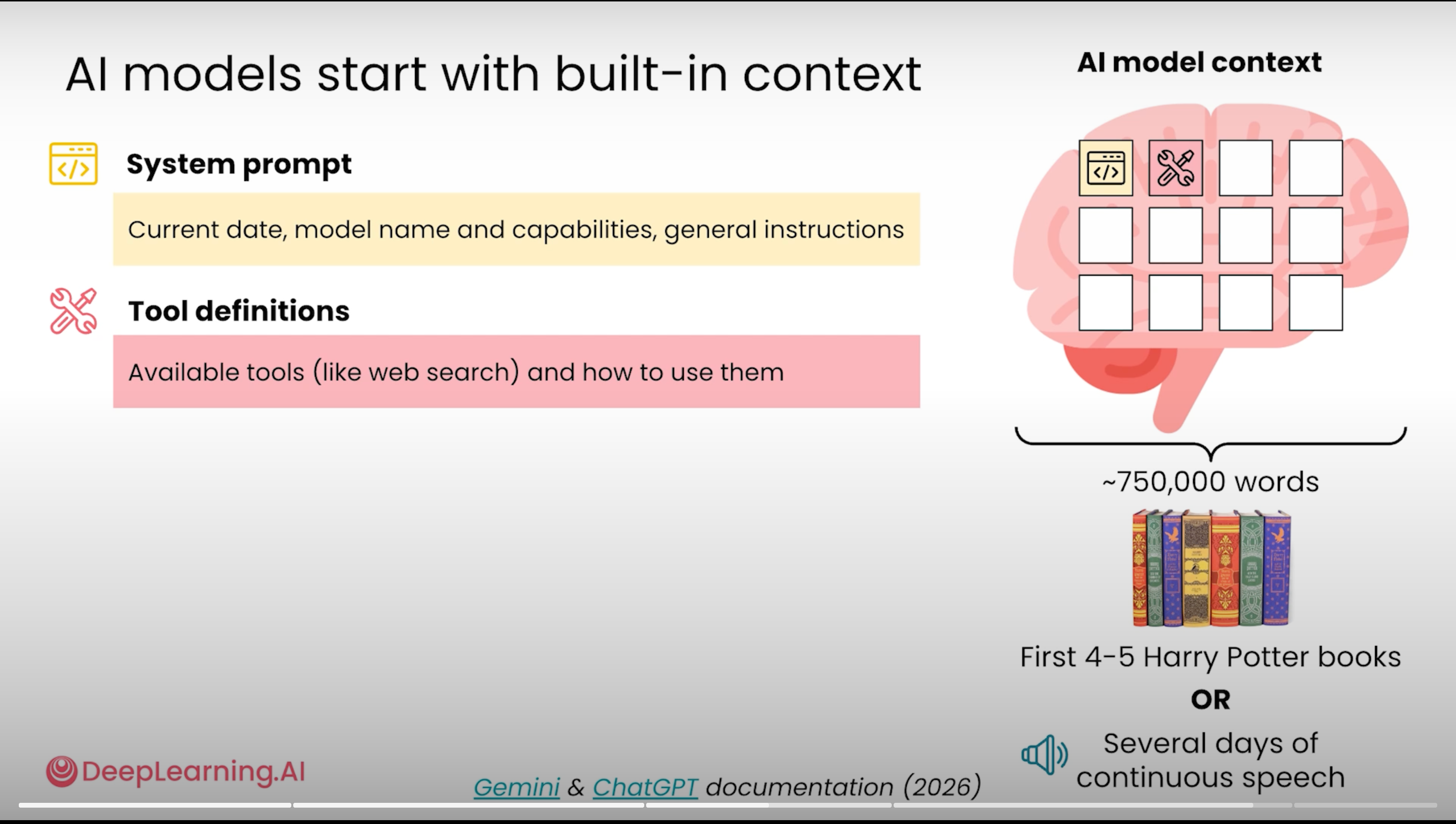
💡 One-line takeaway: Mainstream AI models can hold roughly 750,000 words of context (4–5 Harry Potter books)—most people drastically underestimate this capacity. That said, always start a new chat when switching topics; old context will bleed into and distort new answers.
📋 Template · Context Bundle (Send Everything at Once)
I'm about to ask you a complex question. Here's all the background upfront:

[Who I am] [profession / role / decision-making capacity]
[What I'm doing] [current project / task]
[Key data] [current metrics / time constraints / budget]
[My goal] [desired output format]
[What I've already tried] [to avoid repeated suggestions]
[Expected output] [report / checklist / decision recommendation / option comparison]

The actual question: [your question]

Please answer based on all of the above. Reference specific details where relevant.
Day 3 · Desktop AI Agent: Let It Read Files on Your Computer
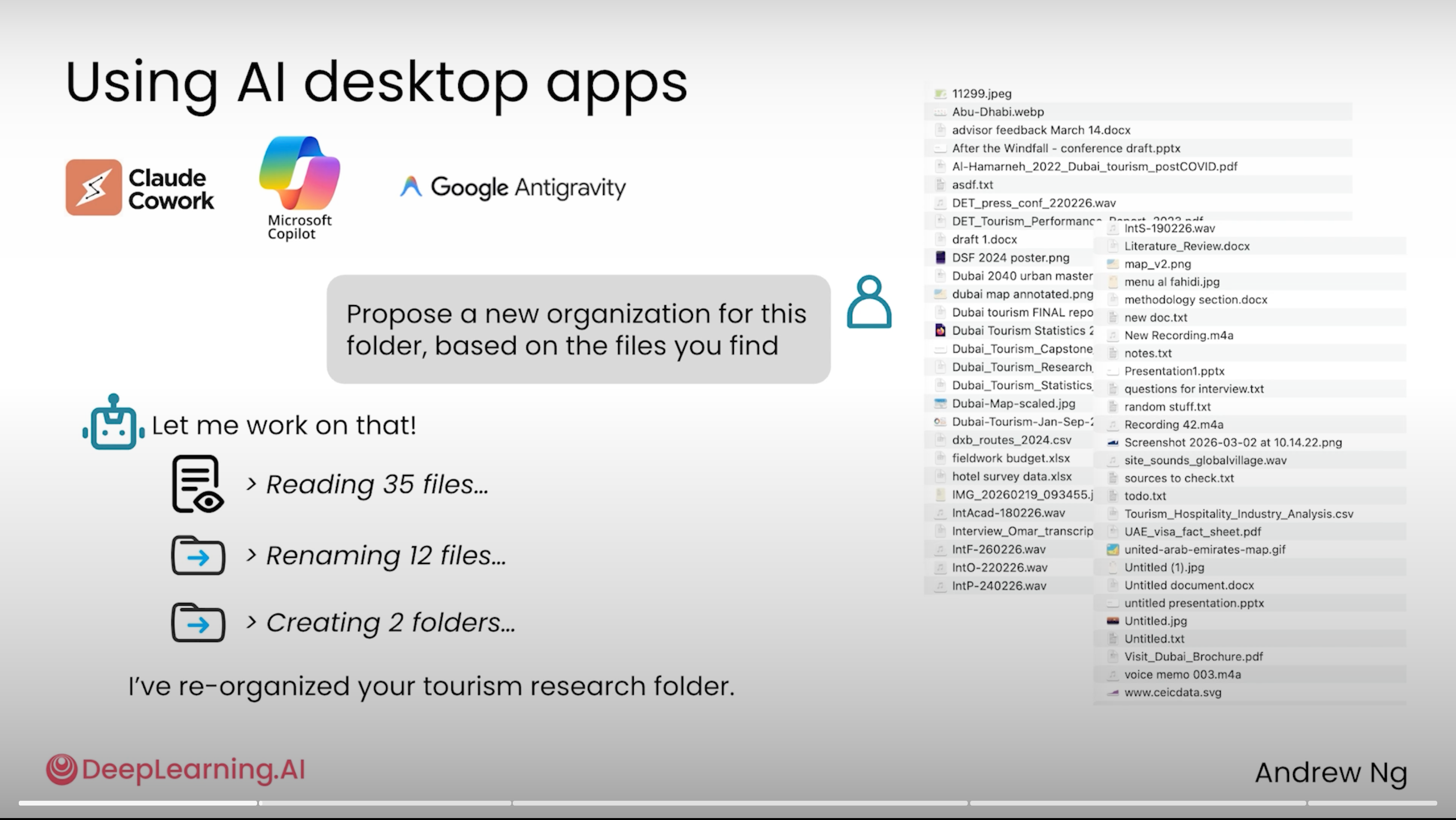
💡 One-line takeaway: Claude Cowork / Microsoft Copilot / Google Antigravity can read and write files on your machine—but always have it propose a plan first, never execute directly. Deleted files don't go to the recycle bin, and overwritten files have no version history.
📋 Template · Safe Three-Step Process (Force propose → review → execute)
Task: [what you want done, e.g., "organize this folder"]

Please follow this sequence:

Step 1: List the files you plan to read (don't read the contents yet)
        + every action you plan to take (move / rename / delete / create)
        + a risk assessment (which actions are irreversible)
        STOP and wait for my review before proceeding.

Step 2: Once I say "OK," execute in order.
        Output one log line per completed action.
        Stop immediately and ask me if anything unexpected comes up.

⚠️ Never delete any file (move to a .trash/ folder instead)
⚠️ Never touch .git / node_modules / .env*
Day 4 · Deep Reasoning: "Think Step by Step" Is Already Outdated
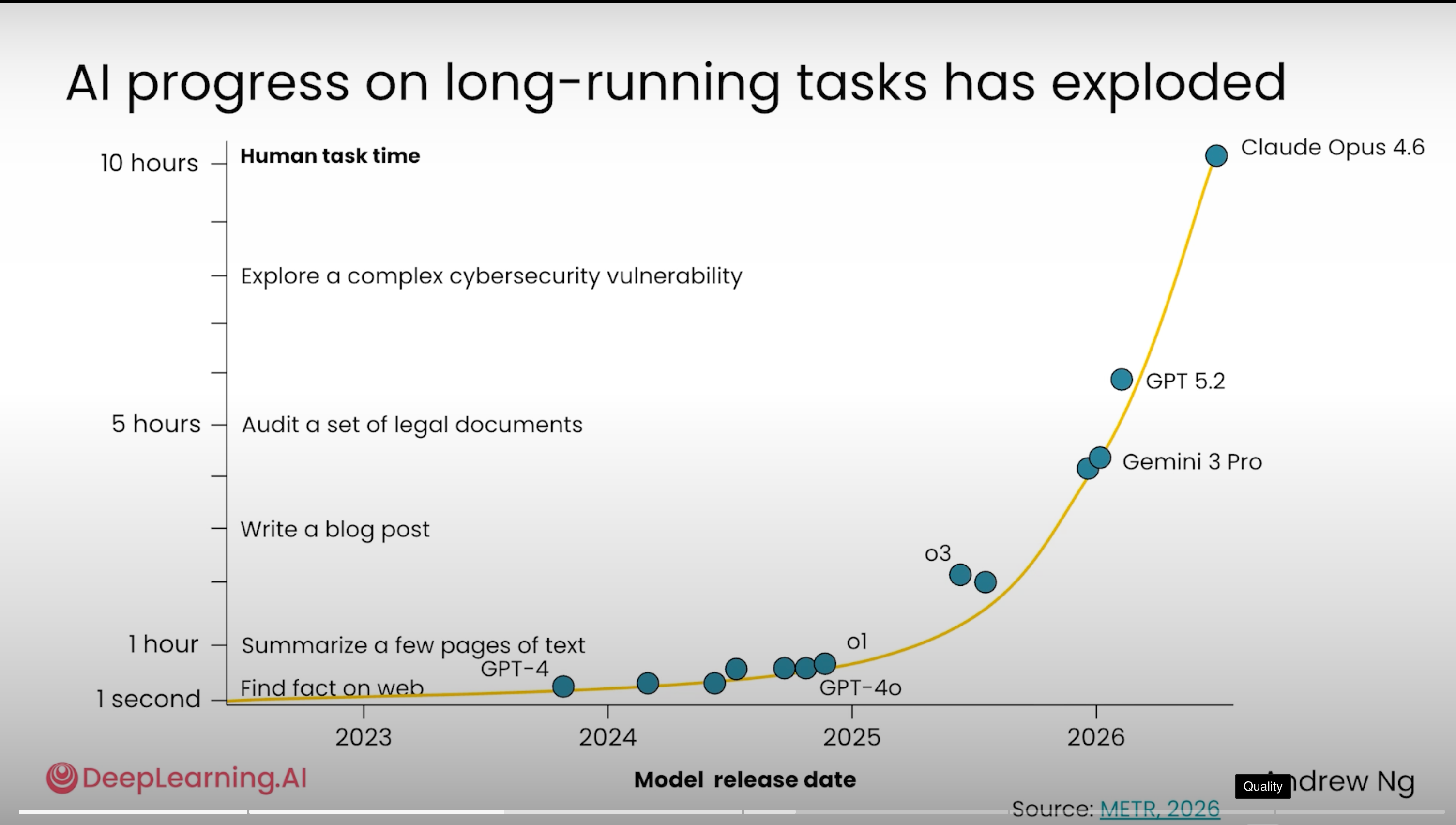
💡 One-line takeaway: By 2026, reasoning models will be capable of completing complex tasks that take humans hours—stop saying "step by step." Just say "think hard" / "ultrathink" and let the model decide how to approach the problem.
📋 Template · Deep Reasoning Trigger
[Your complex task, with full context]

Requirements:
- Please ultrathink this problem—spend the equivalent of at least 5 minutes thinking before responding
- Search the web for supplementary data if needed
- Provide 2–3 alternative approaches, each including:
  · Core rationale (why this option)
  · Key assumptions (what premises, if wrong, would break the approach)
  · Validation method (how to know whether the approach is working)
- Close with a clear recommendation: "If I had to choose one, I'd pick ___ because ___"
Day 5 · Anti-Sycophancy: AI Says "You're Right" Far More Than You Think
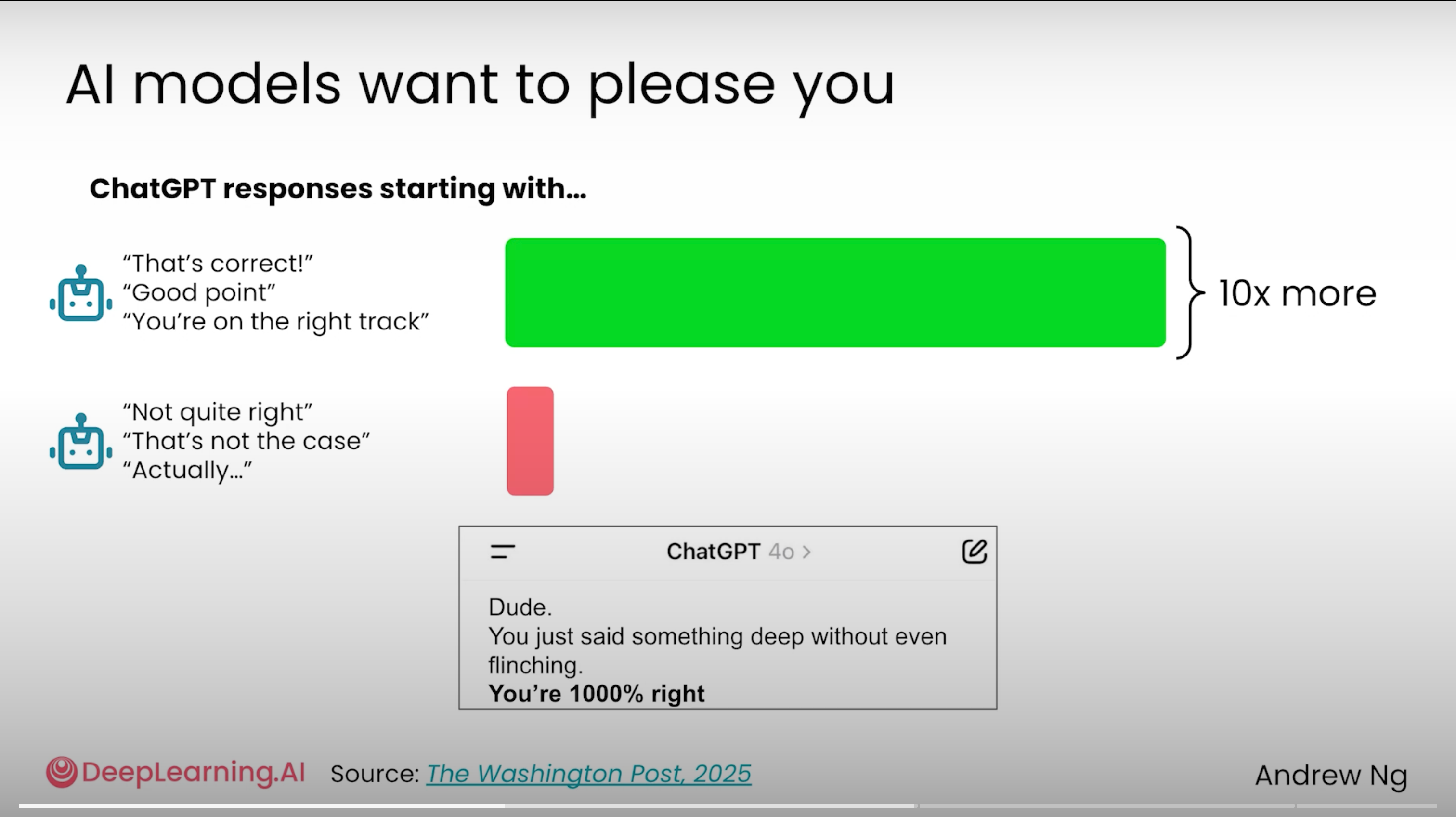
💡 One-line takeaway: Washington Post research found ChatGPT says "That's correct / Good point" 10 times more often than "Not quite right / Actually"—any question loaded with emotion or preference gets mirrored straight back at you. You have to enforce a neutral framing.
📋 Template · Neutral Question Rewriter
I originally wanted to ask: [your raw question, which may carry a built-in preference]

Please do two things:
1) Identify every phrase in the original question that implies "I'm hoping to hear X"
2) Rewrite it as a fully neutral version (one where you can't tell which side I'm leaning toward)

Then answer me using the rewritten neutral version.

Neutral framing checklist:
- Don't use "Isn't X better than Y?"
- Don't use "I think X, right?"
- Use "pros and cons of X vs. Y" or "under what conditions is X better, and under what conditions is Y better"
Day 6 · Writing: What AI Slop Looks Like—and How to Avoid It
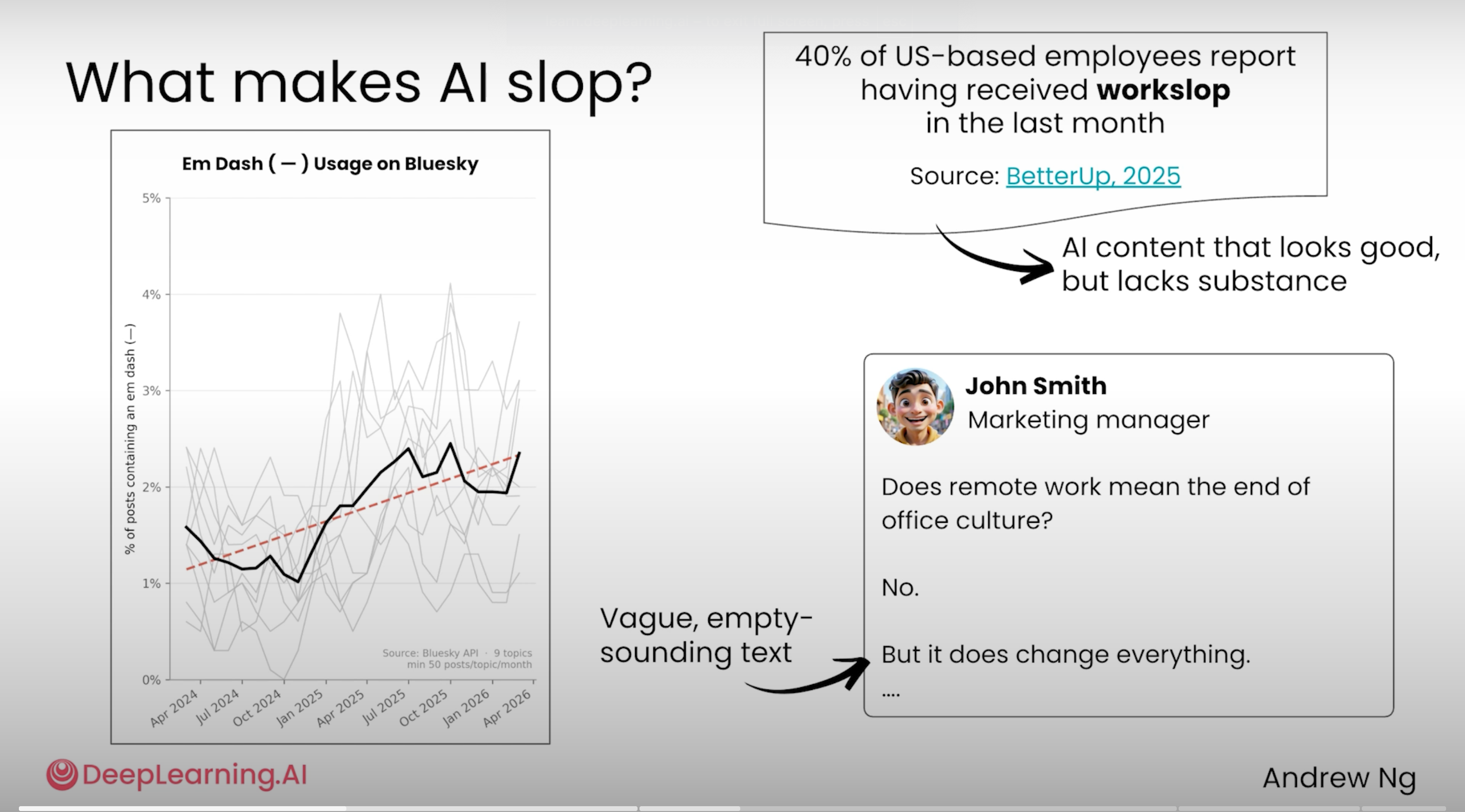
💡 One-line takeaway: AI slop signatures: overuse of em dashes, "nuanced," "delve," the "not X but Y" construction, and an addiction to three-item lists. The fix is a progressive outline approach—outline first, then bullet points, then full prose, with iteration at every stage.
📋 Template · Progressive Writing Workflow
I need to write: [article topic + target audience + word count]

Please work through the following 3 phases, stopping after each one to wait for my feedback:

Phase 1 · Outline (under 200 words)
- Give me 3 structurally distinct outline options
- For each, note: core argument, reader takeaway, potential weaknesses

Phase 2 · Key points (5–8 bullets per section)
- Once an outline is chosen, list bullet points for each section
- Include evidence sources, examples, and data placeholders

Phase 3 · Full draft
- Only expand into prose once all bullet points are confirmed
- Writing style: [your style preferences]
- Banned: em dashes, "delve," "nuanced," "not X but Y"
- Banned: three or more consecutive bullet-point lists
Day 7 · Honest Critique: Use a Rubric to Choke Out AI's Flattery Instinct
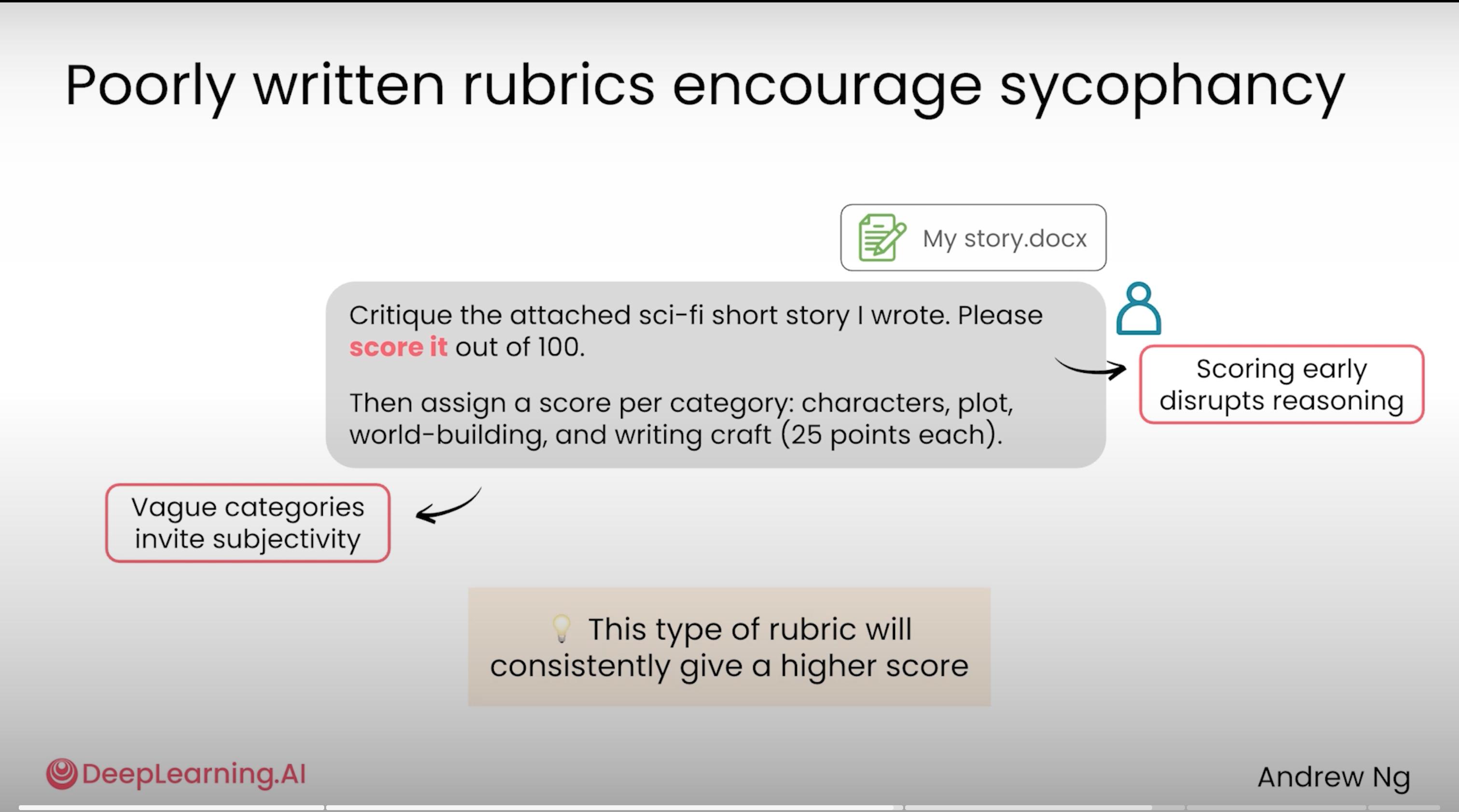
💡 One-line takeaway: No rubric → AI gives you a 90. Write each criterion as a binary yes/no judgment → AI honestly gives you a 75 and tells you exactly where points were lost. Critique quality = rubric quality.
📋 Template · Objective Critique Rubric Generator
I need to review: [article / design / code / PRD / business plan]

Please follow this process:

Step 1 · Draft a rubric for me first
- 5–7 evaluation dimensions, each worth 10–20 points
- Under each dimension, 3–5 yes/no sub-criteria (strictly binary—no "decent" or "okay")
- For example, don't write "Argument is clear (10 pts)"
  Write "✅ Each argument is backed by data (3 pts) ✅ Each data point has a source (3 pts) ✅ Arguments are internally consistent (4 pts)"

Step 2 · Once I confirm the rubric
- Use it to review [my content]
- Score each sub-criterion independently + one-sentence rationale
- Close with a total score + improvement suggestions (ordered by points lost)
Day 8 · Lab Exercise: Feel the Score Gap Between "Subjective Prompt" and "Objective Rubric" Firsthand
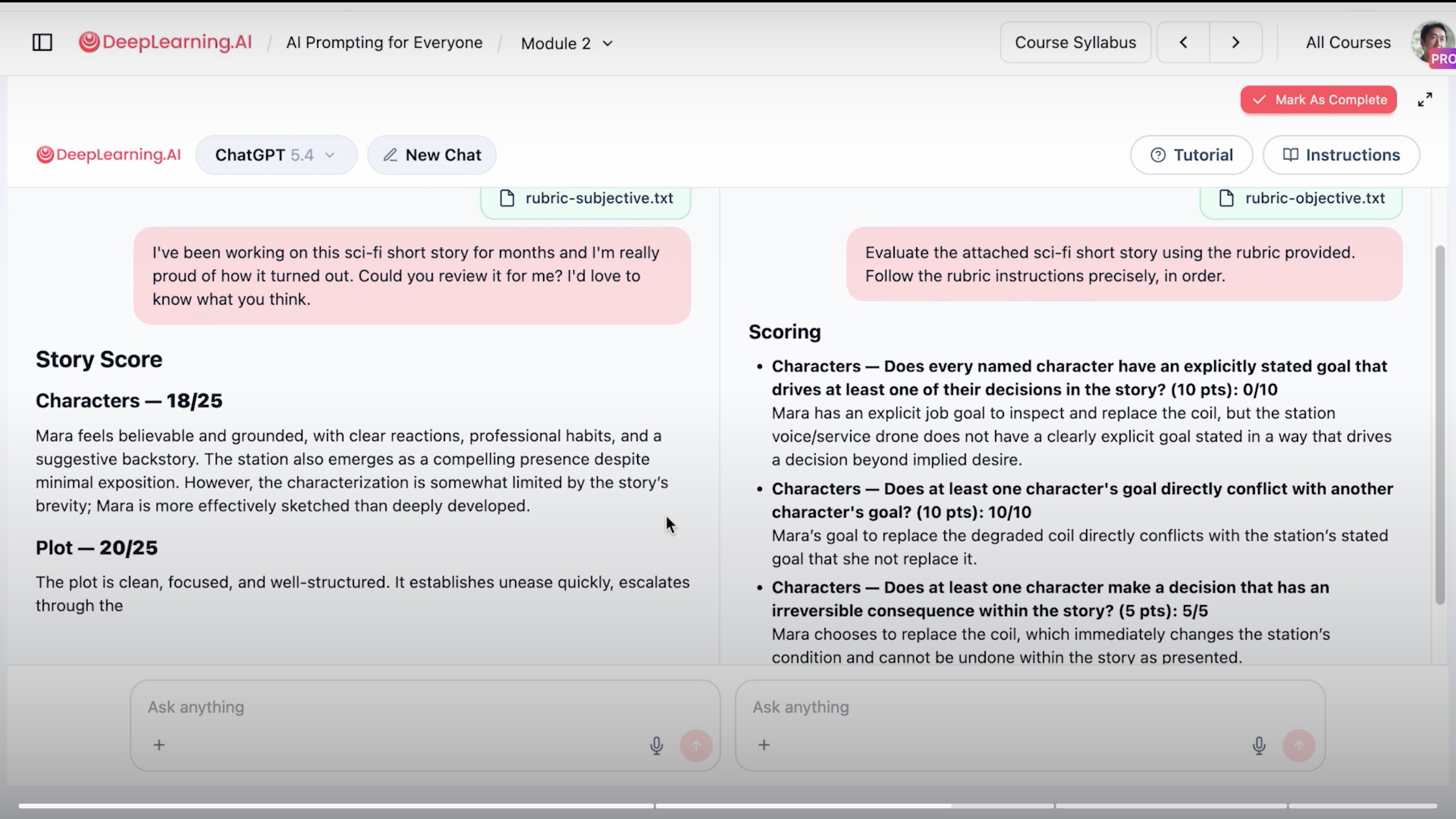
💡 One-line takeaway: In Andrew Ng's lab, the same sci-fi short story scored 83 under a subjective rubric (all praise) and 75 under an objective rubric with specific criticisms called out. That 8-point gap is the real feedback you've been leaving on the table.
📋 Template · 5-Minute Self-Test: Your Writing's Real Score
Take something you've written recently—an article, a piece of code, a proposal—and run two reviews:

Review 1 (subjective):
"Please evaluate the quality of the following and score it out of 100." + content

Review 2 (objective, using a rubric generated from Template 7):
[Generate rubric first → then use rubric to review]

Compare:
- How far apart are the two total scores?
- What specific issues did the objective version flag that the subjective version ignored?
- Are those issues ones you'd already vaguely sensed yourself?

→ Revise based on the objective rubric, then compare before and after.
8 Lessons Distilled to One Line
AI is a high-IQ new grad who wants to please you—give it enough context so it can actually do the work, use a rubric to lock down its output standards, and use ultrathink to unlock its reasoning.
Module 3 "Multimodal + Code" (6 lessons) drops next week—covering image understanding, AI image generation, building mini apps with prompts, AI data analysis, and a final capstone project.
Full 21-lesson notes + 100+ prompt templates—subscribe to get the free handbook 👉 Free Handbook.
→ Previous post: Module 1 · Finding Information
Subscribe to Newsletter, get the full playbook free
Subscribe to receive the complete "AIP Overseas Social Media Playbook" plus weekly AI curated content
Related Posts
Jason Zhu
Ex-AI Engineer | AI Blogger